By Aburime Jane Efose
Introduction
Human trafficking and irregular migration have become major global concerns, affecting millions of people worldwide. In Nigeria, many young people leave their homes in search of better opportunities, safety, and improved living conditions. Unfortunately, some fall into the hands of traffickers who exploit them through forced labour, sexual exploitation, and other forms of abuse.
Driven by poverty, unemployment, insecurity, and desperation, irregular migration continues to expose vulnerable individuals to dangerous journeys and exploitation.
Understanding Human Trafficking
Human trafficking involves the illegal recruitment, transportation, and exploitation of people through deception, coercion, or force. Victims are often promised jobs, education, or a better future, only to end up in exploitative conditions.
Although human trafficking differs from historical slavery, both involve the exploitation and control of human beings for profit. Today, trafficking remains one of the fastest-growing crimes globally.
In Nigeria, trafficking occurs both internally and across international borders, with women and children remaining the most vulnerable groups.
Internal and External Trafficking in Nigeria
Internal trafficking involves moving victims within Nigeria, often from rural communities to major cities such as Lagos, Abuja, Port Harcourt, and Ibadan for domestic labour, street hawking, or exploitation.
External trafficking involves transporting victims to countries across Africa, Europe, and the Middle East. Many Nigerians are trafficked through dangerous routes across the Sahara Desert, Libya, and the Mediterranean Sea.
Italy has historically been identified as one of the major destinations linked to the trafficking of Nigerian women for sexual exploitation.
The Link Between Irregular Migration and Trafficking
Human trafficking and irregular migration are closely connected. Because traffickers cannot operate through legal travel systems, they rely on unsafe and undocumented migration routes.
Many migrants begin their journey willingly, hoping for better opportunities abroad, but become trapped in exploitation due to lack of protection, legal documentation, and accurate information.
Major Causes
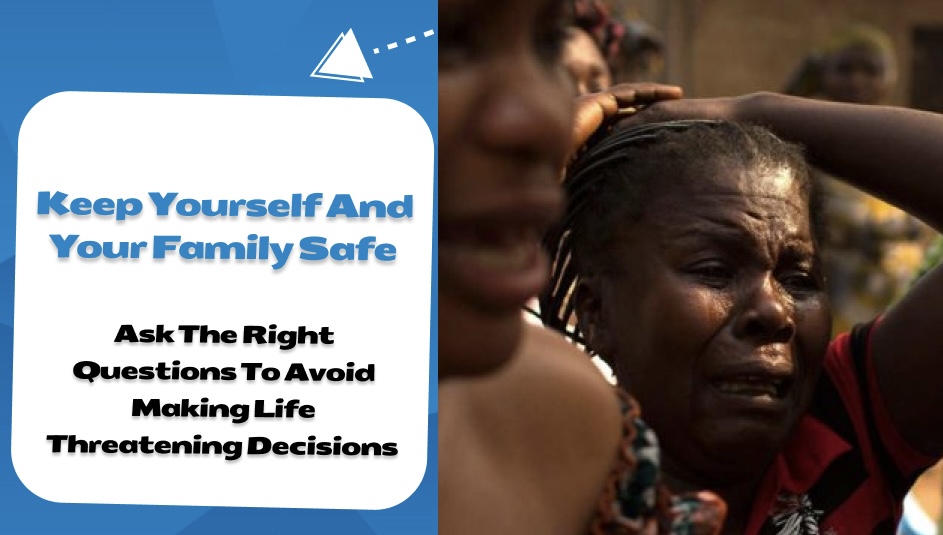
Several factors continue to fuel trafficking and irregular migration in Nigeria, including:
• Poverty and economic hardship
• Unemployment
• Insecurity and conflict
• Lack of awareness
• Corruption and weak enforcement systems
These challenges make many young people vulnerable to false promises made by traffickers.
Efforts to Combat Human Trafficking
Governments and international organisations continue to strengthen efforts to combat trafficking and protect vulnerable populations.
One major international framework is the Palermo Protocol, adopted by the United Nations in 2000 to prevent trafficking, protect victims, and punish offenders.
In Nigeria, laws such as the Trafficking in Persons (Prohibition) Enforcement and Administration Act and the Child Rights Act were established to protect victims and prosecute traffickers.
The National Agency for the Prohibition of Trafficking in Persons (NAPTIP) also plays a major role in rescuing victims, prosecuting offenders, and creating awareness about the dangers of human trafficking and irregular migration. Since its establishment in 2003, NAPTIP has rescued and rehabilitated thousands of trafficking victims across Nigeria.
Conclusion
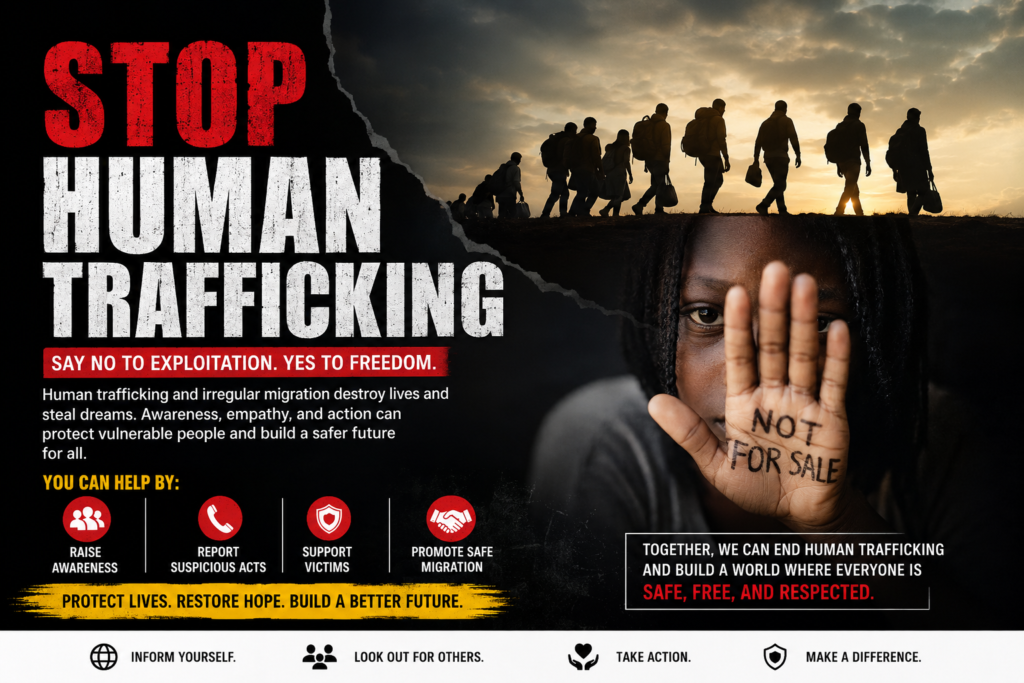
Human trafficking and irregular migration remain serious threats to human dignity and security in Nigeria and across the world. While many people migrate in search of hope and better opportunities, unsafe migration routes continue to expose vulnerable individuals to exploitation and abuse.
Addressing these challenges requires collective action from governments, communities, organisations, and citizens. Creating economic opportunities, increasing awareness, and promoting safe migration practices are essential steps toward protecting lives and reducing exploitation.